
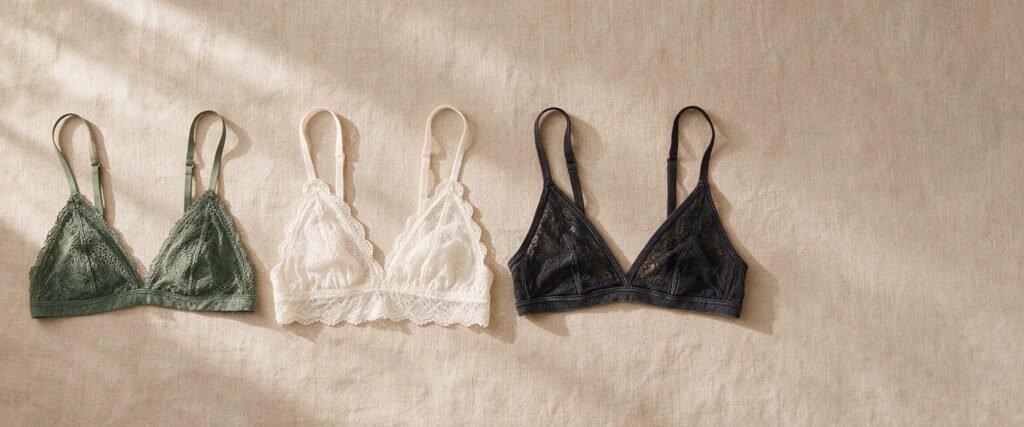
Starting a private label lingerie brand requires a minimum budget of $2,500–$3,200 for a first order (50 pieces each across four styles, landed in the US), a 13–17 week lead time from first contact to warehouse delivery, and either a reference image or a tech pack to get started. This guide is written from the factory side — with real FOB prices, honest timelines, and advice on when manufacturing is the wrong choice entirely.
Most articles on how to start a lingerie business come from one of two sources. The first is a POS software company (Lightspeed, Shopify, BigCommerce) whose interest is getting you to open a retail store and pay for their platform. The second is a sourcing agent whose business model requires sitting between you and the factory. Neither has any reason to give you real manufacturing numbers.
We are neither. KnitUnderwear is a lingerie factory in Shuyang, Jiangsu, China. We have 150 staff, 92 sewers on the production floor, and we have worked with 120+ brands across 32 countries since 2011. This guide includes the numbers the others skip and honest advice about when manufacturing is the wrong choice for you.
First, which lingerie business are you actually building?
The phrase “start a lingerie business” covers two very different operations.
Path A: A retail lingerie business. You buy finished inventory from wholesalers or brands and sell it under your store name or resell label. The questions you care about are margins, inventory turns, customer demographics, and retail location. This is the business Lightspeed’s guide is describing. If this is your path, our wholesale lingerie page covers what we can offer you as a supplier.
Path B: A private label lingerie brand. You design your own product: silhouettes, fabrics, sizing, labels. A factory manufactures it. You own the product. You control the margins. And you face the full complexity of manufacturing: tech packs, sampling, MOQ commitments, and international freight.
This guide is for Path B. If you’re reading it because you want to know how to start a lingerie business from scratch and own the product, keep going.
What type of lingerie you make changes every number in this guide
Lingerie is not a single product category in manufacturing terms. A cotton brief and an underwire balconette bra share a shelf in a department store but nothing else. They require different patterns, different machinery, different quality checks, and very different sampling processes.
Before you talk to any factory, know which category you’re entering:
| Category | Construction complexity | FOB range at 50 pcs | Notes for first-time brands |
|---|---|---|---|
| Bralette | Low | $7–$14 | No underwire, stretch fabric, fast to sample — best starting point |
| Brief / panty | Low | $4–$9 | Fastest production cycle of any category |
| Sports bra | Medium | $9–$16 | Compression fabric and seam placement require fit testing |
| Underwire bra | High | $14–$25+ | More revision rounds typical; band and cup sizing must be graded properly |
| Bodysuit | Medium–High | $12–$22 | Snap crotch construction adds a step; size grading is more complex |
| Sleepwear set | Medium | $15–$30 per set | Two-piece orders require coordinated fabric batches |
All numbers above are KnitUnderwear FOB prices at 50 pcs per style per color. They exclude freight, import duties, sampling fees, and your packaging costs.
If you are launching your first product, start with a bralette or a brief. You will learn the manufacturing process without the complexity of graded underwire sizing. Mistakes in fit are less expensive to correct. Once you understand how sampling rounds work, move into more complex categories.
Which fabric is right for your first product?
Once you have a category picked, the fabric question comes up almost immediately. What you choose changes how the garment feels, what the FOB works out to, and how long sampling takes. Here are the fabrics we work with most at KnitUnderwear.
| Fabric | Typical fiber content | Common uses | FOB impact vs. standard | Notes |
|---|---|---|---|---|
| Stretch lace | Nylon 90% / Spandex 10% | Bralettes, trim, boyshorts | Neutral baseline | Most popular for first orders; widely available in stock colorways |
| Power mesh | Nylon 82% / Spandex 18% | Sports bras, bodysuit panels, underwear lining | Neutral | Sheer — usually layered with a solid lining; good for structure without weight |
| Cotton jersey | Cotton 92% / Spandex 8% | Soft bralettes, briefs, everyday basics | −$1–$3/pc | Breathable and comfortable; OEKO-TEX certified cotton available on request |
| Microfiber | Nylon / Spandex blend | Smooth-finish briefs, seamless-look styles | +$1–$2/pc | Opaque, silky surface; minimal visible seam lines — popular for everyday basics |
| Ribbed jersey | Cotton 90% / Spandex 10% | Bralettes, cropped tops, waistband detailing | Neutral | Trending 2024–2026; confirm lead time on ribbed stock — availability varies by season |
| Satin | Polyester satin / Spandex | Sleepwear, trim, waistbands | +$2–$5/pc | Available for sleepwear styles and decorative trim; not typically used as a primary knit body fabric |
FOB impact is approximate relative to a mid-range stretch lace bralette at 50 pcs. Fabric is only part of the cost; panels, trims, and construction complexity all move the number. Send us a reference image and we’ll give you a specific number.
The step every “how to start a lingerie business” article skips: the tech pack
Search for guides on how to start a lingerie business and almost none of them mention a tech pack. This is the most expensive omission in the industry for new founders.
A tech pack is a technical specification document for a single garment. It tells the factory exactly what to make:
- Fabric specification — fiber content, weight in grams per square meter, stretch percentage, color reference (Pantone or physical swatch)
- Construction details — seam type, stitch count per centimeter, elastic type and width, underwire gauge if applicable
- Graded measurements — garment dimensions at each size in the size run
- Trim details — hook-and-eye size, slider type, strap width, hardware finish
- Label placement — care label, brand label, size label position and attachment method
- Packaging instructions — individual poly bag, folding method, inner carton count
Without a tech pack, two different factories reading the same reference image will produce two different garments. Your second production run will not look like your first. Every extra sample round is miscommunication you paid for.
What if you don’t have a tech pack?
You do not need a completed tech pack before contacting us. You need reference images.
A reference image can be a photo of a style you like from another brand, a hand sketch, a sample garment you’ve purchased, or a mood board with construction details annotated. From that reference, we produce a tech pack draft during the selection phase of our working process. If you produce with us, this is included at no charge. If you take the tech pack and produce elsewhere, we charge for the development work.
Starting with reference images is fine. Starting with “I want something cute and comfortable” is not — that brief produces ten rounds of samples and a confused factory floor.
Free Download: Lingerie Tech Pack Template (.xlsx)
Six tabs: style overview, fabrics & materials, measurements, construction details, labels & packaging, and a pre-sampling checklist. Fill in what you have — leave the rest blank and we will work from it.
Download Free Template No email required · Excel (.xlsx) · 19 KB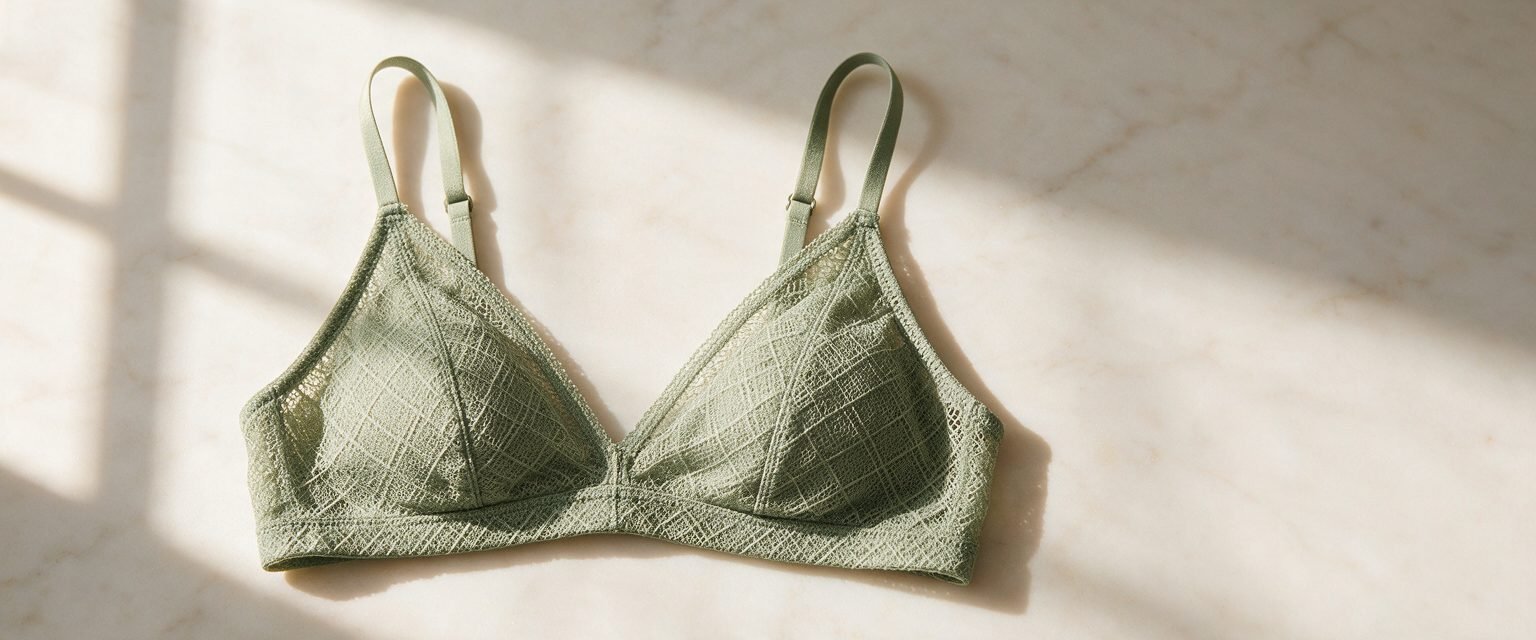
Real cost numbers for starting a lingerie brand
The sourcing agent Jingsourcing estimates you can start a lingerie business for $500–$1,000. That figure comes from buying white-label finished goods on AliExpress or from a wholesale market and reselling them. For a private label brand where you own the design and the factory produces to your specifications, the minimum realistic investment is higher.
Here is what a real first production run looks like:
Sampling costs
Sample fees at KnitUnderwear are priced per style based on construction complexity. A bralette samples differently from an underwire bra with nine components. We quote sampling costs when you submit your reference. Budget for one revision round — almost every first sample needs at least minor adjustments in elastic tension, strap length, or label placement.
First production order — worked example
Say you launch with two bralette styles in two colorways each. That gives you four SKUs.
- 4 SKUs × 50 pcs minimum = 200 pieces total
- At an average FOB of $10 per piece (mid-range bralette): $2,000 FOB
- Sea freight to US West Coast (LCL at typical dimensions): roughly $300–$600
- US import duties: bralettes without underwire typically fall under HTS 6112 or 6114 — confirm the current rate with your customs broker before ordering
- Your own hang tags, poly bags, and packaging: $100–$300 depending on spec
Estimated landed cost for this first run: $2,500–$3,200, before your marketing spend and before you’ve taken a single photo.
This is what starting a lingerie business actually costs at the manufacturing level. It is not $500. It is also not $50,000. Two bralette styles at 200 pieces is a manageable test run for most early-stage founders.
One example of how this plays out: a European first-time founder sent only reference photos of a lace bralette — no technical drawings, no measurements. We built the spec from the reference using an existing ODM base pattern, produced 200 pieces across three colorways in 35 days, and kept total sampling costs under $250. They ran social media pre-sales before the shipment left our warehouse, sold 80% of inventory before it arrived, and placed a 1,200-piece reorder two weeks later. The ODM route, and starting with reference photos rather than waiting to develop a full tech pack, is what made that timeline possible.
How to size your first order
This question paralyzes more first orders than any other: how many styles, how many colors? The table below breaks it down at 50-piece minimums.
| Scenario | Styles × Colors | Total pieces | Est. FOB | When to choose this |
|---|---|---|---|---|
| Minimum test run | 1 style × 2 colors | 100 pcs | ~$900–$1,100 | You want to validate fit and quality before committing more capital |
| Standard first brand | 2 styles × 2 colors | 200 pcs | ~$1,800–$2,200 | A small coherent collection — this is the worked example above |
| Bralette + brief set | 2 styles (one of each type) × 2 colors | 200 pcs | ~$1,600–$2,000 | Launching a matching set from day one without doubling sampling costs |
| Larger first order | 3 styles × 3 colors | 450 pcs | ~$3,800–$5,000 | Only if you have pre-orders or a confirmed retail channel already in place |
FOB estimates are based on mid-range knit bralettes ($9–$11/piece at 50 pcs MOQ). Structured styles with underwire or molded cups run higher; basic briefs and boyshorts run lower.
One rule worth keeping: do not start with more than three styles. Sampling errors compound — one fit issue on one style triggers a revision round that delays everything else. Start narrow, reorder fast.
Free Download
First Order Checklist for Lingerie Brands
8 sections · 40+ checkboxes · covers MOQ, labels, duties & timeline
OEM or ODM — the choice affects your budget, timeline, and ownership
Every lingerie manufacturer offers some version of these two routes. Understanding the difference before you talk to factories will save you days of back-and-forth.
OEM (Original Equipment Manufacturing) means you own the design. You provide the pattern, the tech pack, or enough specification that the factory is building your original concept. The intellectual property belongs to you from the start. At KnitUnderwear, OEM samples take 10–14 days because we’re working from scratch.
ODM (Original Design Manufacturing) means the factory owns the base pattern. You select from an existing library (we have 200+ base patterns) and customize the fabric, colorway, trims, and labels. You get to market faster and sampling costs are lower because the core pattern is already graded and tested. ODM samples take 7–10 days. You don’t own the base pattern, but you own your branding and colorway.
Our OEM & ODM page covers both routes in detail, with what to send us for each one.
| Your situation | Better route |
|---|---|
| First product, no existing patterns | ODM — faster, lower risk |
| You have a design that exists nowhere else | OEM — protect it from the start |
| Budget is tight on sampling | ODM — base pattern already done |
| You’ve approved a sample elsewhere and need production | OEM — bring your approved sample |
| You want full exclusivity from day one | OEM |
Most brands start ODM, learn what their customers respond to, then transition to OEM for their second-generation designs. That is not a failure — it is how you de-risk the first $3,000.
The full timeline from idea to first delivery
Below is KnitUnderwear’s typical first-order timeline on the ODM route: reference images only, sea freight to the US. No tech pack required before week one.
| Week | What happens |
|---|---|
| Week 1 | Send reference images → receive quote → confirm sample order and pay sample fee |
| Weeks 2–3 | Sample production (7–10 days for ODM) |
| Week 3–4 | You receive samples via air express. Review fit, fabric handle, construction, label placement. |
| Week 4–5 | Send revision comments → revised sample produced (5–7 days) → approve final sample |
| Week 5 | Sign off on spec sheet and fabric batch. Place production order. Pay 30% deposit. |
| Weeks 6–11 | Bulk production (30–45 days). AQL inspection before packing. |
| Week 11 | Inspection passed. Arrange freight. Pay 70% balance after inspection. |
| Weeks 12–14 | Sea freight transit to US West Coast (approx. 3 weeks) |
| Weeks 14–16 | Sea freight transit to US East Coast (approx. 4–5 weeks) |
Total from first contact to goods in your hands: 13–17 weeks by sea. First orders are slower because sampling is new. Reorders cut this down significantly — no sampling phase, and the fabric batch and spec sheet are already approved.
Air freight shortens the final transit to 5–7 days but costs 4–6× more per kg. Use air for time-sensitive launches, sea for regular restocks.
Design protection: what to do before sending your files
A common concern from new brands is: “If I send my design to a factory in China, what stops them from selling it to someone else?”
The honest answer depends on which factory you choose and what agreements you have in place.
For OEM clients at KnitUnderwear, we sign a non-disclosure agreement before reviewing your spec files. Your OEM patterns are stored under your brand name and not reproduced for any other client. For ODM clients, the base pattern is not exclusive — it is in our library, but your colorway, your label, and your specific trim combination are treated as your brand’s configuration.
If you have a genuinely novel design concept, register it with the US Copyright Office before sending specifications to any factory. A copyright registration costs $65 for a single work and creates a documented record of ownership and date.
Real first order
Two lace bralette styles, two colorways each — 200 pieces total
A first-time brand founder came to us with reference images for two lace bralette designs — two colorways each, no tech pack, no manufacturing experience. Four SKUs, 50 pieces apiece.
- 2 styles × 2 colors × 50 pcs = 200 pieces
- Estimated FOB at this spec: $1,800–$2,200
- Route: ODM (we developed the pattern from reference images)
This is the most common first-order structure we see. Two styles, two colors — enough to test the market without betting everything on one design. You find out which colorway moves before you reorder at scale.
When you should not go to a lingerie manufacturer
This section does not appear in any sourcing agent’s guide, for obvious reasons.
Your total budget is under $2,000. By the time you pay sampling fees and a minimum production order, you will be at or past that number. Start by buying finished wholesale goods, test whether your customer and pricing work, then return to manufacturing when you have revenue to fund the first run.
You need inventory in three weeks. Sea freight from China is 3–5 weeks in transit alone, before production. If your launch date is imminent, buy wholesale inventory now. Manufacture for drop two.
You have no design direction. “I want lingerie that feels luxurious” is not a brief. If you cannot describe a specific silhouette, a fabric category, and a target price point, you will burn through sample rounds before settling on a direction. Spend $100 on reference samples from retail stores first. Figure out what you’re actually making.
You want to test five pieces before committing. Our MOQ is 50 pcs per style per color. If you want to validate demand before committing to 50 units, shoot photos of approved samples and run pre-orders. Produce on the back of confirmed orders.
Five things to check before signing with any lingerie manufacturer
- Direct factory or trading company? Trading companies add 15–30% margin and do not control your production schedule, quality, or factory floor. Ask for factory photos, headcount, and the physical address. If they can’t give you a factory address and staff number, they’re an intermediary.
- Do they specialize in intimate apparel? Bra construction — wire casing, cup shaping, multi-part band construction — is different from making T-shirts. A general garment factory produces worse bras than a factory where lingerie is all they do. Our bra manufacturing page covers how we approach structured styles specifically.
- What size range do they handle? We produce bands 30–44, cups A–G. Confirm your target size run before signing, especially if you’re entering plus size. Our plus size bra manufacturing covers this category in detail.
- What certifications can they provide? OEKO-TEX Standard 100 matters if you’re selling into markets with eco-conscious buyers or if your brand positioning depends on sustainability claims. We can supply OEKO-TEX certified fabrics and include the certificate with delivery. GRS 4.0 (Global Recycled Standard) is available on recycled polyester blends.
- How do they maintain bulk-to-sample consistency? The correct answer is: locked fabric batches from the same supplier batch used in your approved sample, a signed spec sheet, and an AQL inspection before packing. If a factory cannot describe this process specifically, your bulk will not match your sample.
Practical importing: what to sort out before your goods ship
Get a customs broker early. You do not need to understand US HTS codes yourself, but you need someone who does. A broker costs $100–$300 per shipment for a standard import and will save you more than that in classification errors and holds. Find one before your first production order ships — not after it arrives at port.
Know your Incoterms. We offer both FOB (Free On Board; you arrange freight from our port in Ningbo or Shanghai) and DDP (Delivered Duty Paid — we arrange freight and customs to your door). FOB gives you more control over freight cost. DDP simplifies your first order.
CPSIA compliance if you’re selling in the US. Lingerie intended for children under 12 is subject to CPSIA testing requirements. Adult intimate apparel has separate standards. If you’re in any doubt about compliance requirements for your product category, check with your customs broker or a compliance consultant before placing your first order.
Two mistakes we see repeatedly. The first: a US brand classified their bralettes as general apparel rather than knitted intimate wear. Customs opened the container for inspection, held the shipment for 12 days, and the brand paid nearly $900 in detention and warehouse fees that a correct HTS code would have avoided entirely. The second: a startup chose sea freight to save on shipping costs, but timed their first order into peak season vessel congestion. The shipment arrived 28 days late and missed their planned summer launch window. The cost difference between sea and air on a 200-piece first order is often $400–$600 — less than the cost of a missed seasonal window.
Frequently asked questions
Ready to start? Send us a reference image.
We review every inquiry within one business day. Send a reference photo of the style you have in mind, or a description if you’re still deciding, and we’ll come back with a quote and a proposed timeline. No commitment required at this stage.
Get a Free Quote